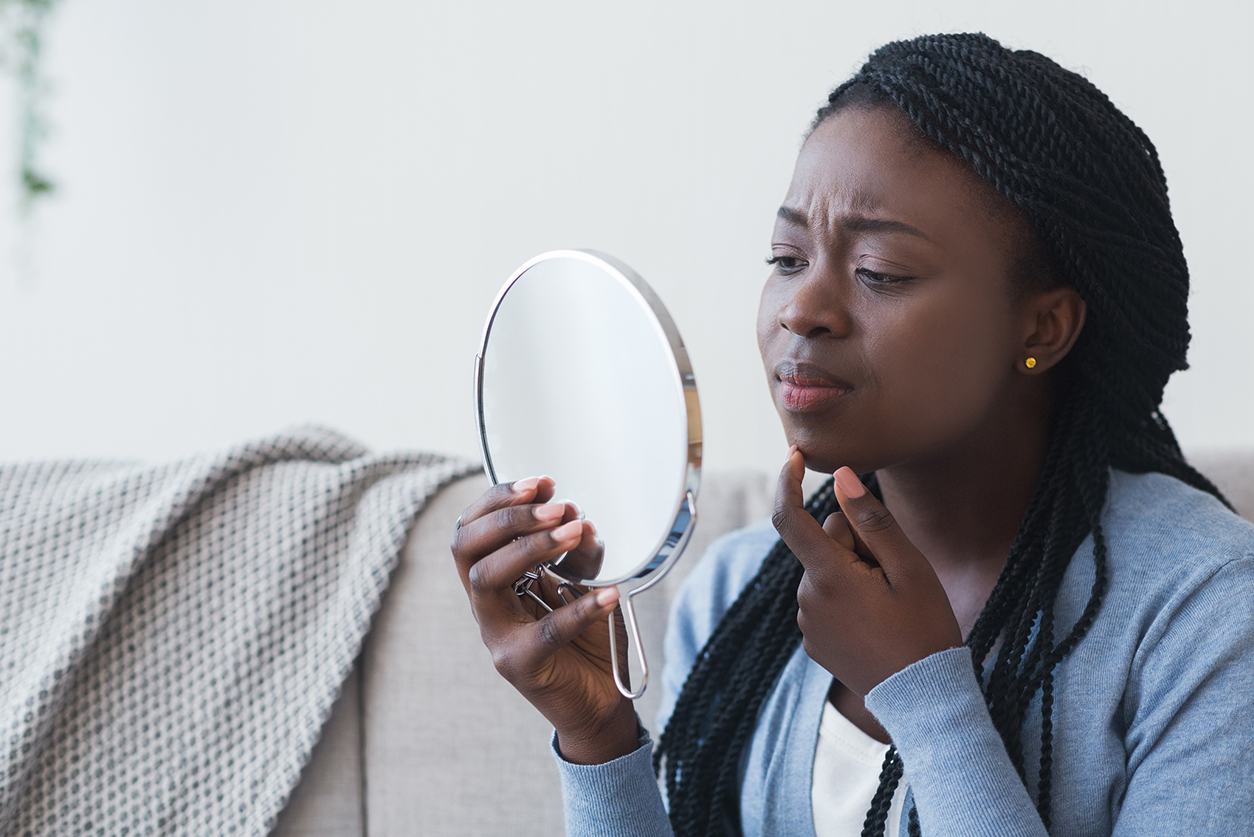
Generally, hormonally induced acne is characterized by deeper sometimes tender pimples occurring on the jawline, chin, forehead, and trunk of female acne patients. Typically this acne subtype flares reliably in relationship (before, often) to one’s menstrual cycle (but not always). Menstrual cycles may be regular or irregular. Importantly, if one’s menstrual cycles are irregular, in conjunction with acne and hirsutism (excess hair growth), one should consider evaluation by an endocrinologist or gynecologist for polycystic ovarian syndrome (PCOS) or other disorder.
Who is at risk for hormonally induced acne?
In my experience I divide hormonally induced acne into the following typical presentations:
1) Teens with significant acne flaring during the week before your menstrual cycle
2) Young women (age ’20s-’30s), often with no history of teenage acne, with a rather abrupt onset of deeper tender pimples
4) Peri-menopausal acne (
5) Women of all ages who recently (2-3 months prior to the onset of acne) switched birth control to include one of the following progesterones: norethindrone, levonorgestrel, etonorgesterel, among others.
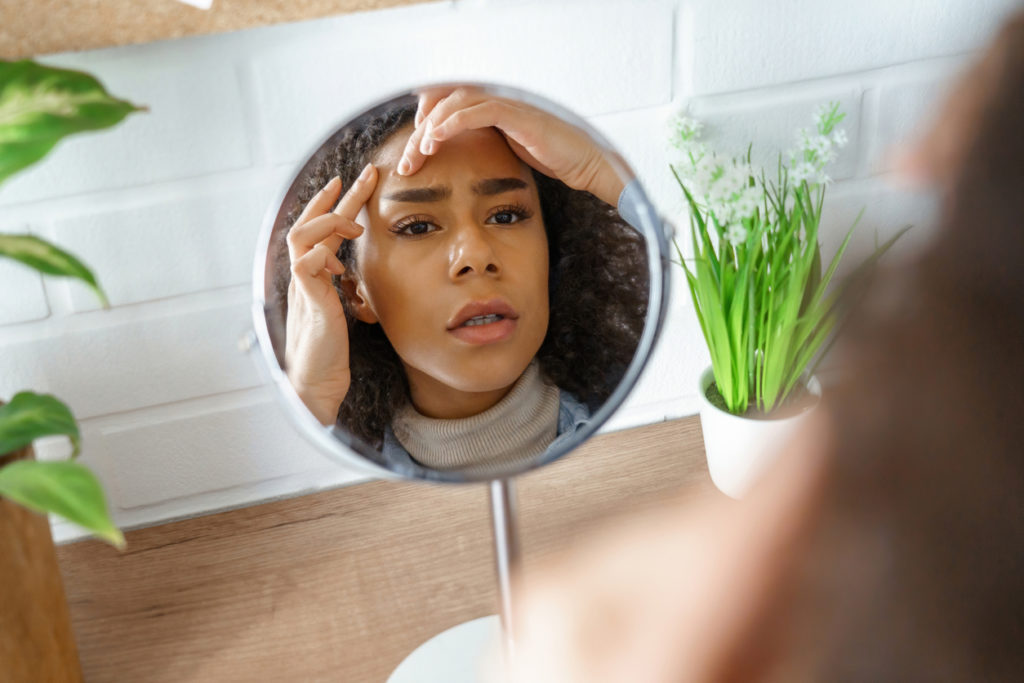
How to treat hormonally induced acne
Treatment of hormonally induced acne can be a bit of a challenge. Topical treatment generally is insufficient to improve hormonal acne, although mild hormonal acne may be improved by clindamycin, azelaic acid, niacinamide, dapsone, or other antimicrobials/anti-inflammatoBook an appointment at Dermcare today!